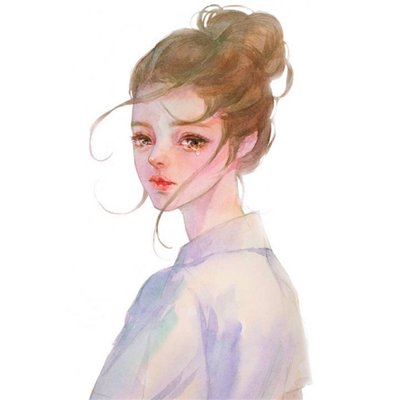
America's contribution to the international watercolor tradition is second to none. Although the British dominated that tradition in the past, American artists have produced a substantial and varied body of work in watercolor that is unmatched elsewhere in the world since the late eighteenth century.
An unpredictable medium, the character of watercolor is uniquely challenging. The accomplished watercolorist learns to take advantage of the unexpected results of the medium. As practiced by most of its greatest masters, spontaneity is everything. The artist learns to improvise, which can be done effectively only with experience. The intimacy of the medium springs from the way it encourages improvisation and seems to record the artist's fleeting thought on paper.
Watercolor, also known in French as aquarelle, is generally described as painting with water-soluble pigments on paper. Most commonly the pigments are suspended in a vehicle or binder of gum arabic. The classic painting technique was perfected in England during the eighteenth and nineteenth centuries. The pigment was applied in a series of transparent washes that allowed light to be reflected from the surface of the paper through layers of color. This technique gives watercolor its unique glow. Washes are layered to increase density and transform color already laid down. With this method, the colors are mixed by the viewer's eye and create a unique visual characteristic.
Copyright © 2026 eLLeNow.com All Rights Reserved.